
The short answer
A ductless mini-split is a good fit when a room or part of your home isn't served well by ducts, or when there are no ducts at all. We assess the space, your electrical panel, and placement options before recommending a system, then install, test, and walk you through it.
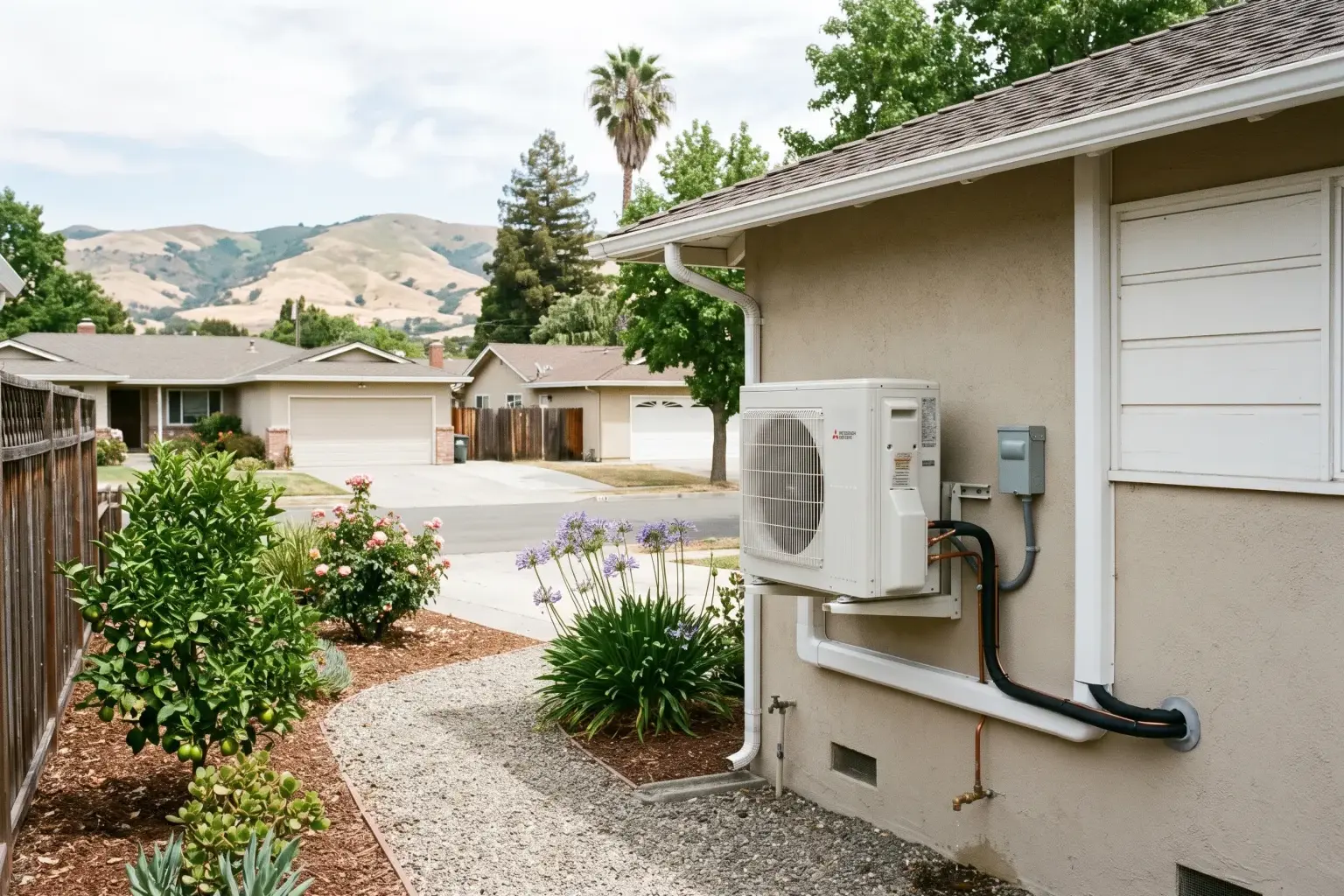
A ductless mini-split heats and cools individual rooms without ductwork. An outdoor heat pump unit connects to one or more indoor heads through a small line set that passes through a single wall opening a few inches across. In Pleasanton, Dublin, Livermore, San Ramon, and Danville, homeowners often choose mini-splits for additions, converted garages, upstairs bedrooms that never get comfortable, and older homes that were built without ducts. This page covers when a mini-split makes sense, what we check before recommending one, how it compares to repairing or replacing your current system, what drives the cost, and what to expect when we come out.
Signs a Ductless Mini-Split May Be Right for Your Home
Most homeowners call us about a mini-split because one part of the house doesn't match the rest. These are the situations we see most often:
A mini-split isn't always the right call. If your whole house already has sound ductwork and the real problem is an aging furnace or air conditioner, a ducted heat pump or a straight equipment replacement may serve you better. We'll tell you which way we'd lean and why.
- A room that stays hot in summer or cold in winter no matter how you set the thermostat
- A garage conversion, ADU, sunroom, or addition with no ductwork
- An older home heated by wall furnaces, baseboard heaters, or space heaters
- Ducts that run through a cramped attic or crawlspace and would be hard to extend
- A second story that runs noticeably warmer than the first floor
- A plan to move away from gas heat over time
What We Check Before Recommending a System
A good installation starts with sizing and placement, not with picking a unit off a shelf. On the first visit we look at:
We also ask what you want to do next. Covering one room now and two more later can change which outdoor unit makes sense, because some outdoor units can serve several indoor heads.
- Room size, ceiling height, window area, and which direction the windows face
- Insulation in the walls and attic, and how drafty the space is
- How the room is used, such as a home office, nursery, or bedroom where noise matters
- Where the outdoor unit can sit with proper clearance, drainage, and distance from bedroom windows, yours and your neighbors'
- The route for the line set and condensate drain from each indoor head
- Your electrical panel's capacity and whether a new circuit is needed
- Wall construction and the best mounting spot for even airflow
Repair, Replace, or Add a Mini-Split
If you already have a heating and cooling system, you have three basic paths: repair it, replace it with similar equipment, or add or switch to a mini-split. The Bay Area Air District appliance rules don't require you to replace working equipment. They apply only when an existing furnace or water heater fails or is replaced. If your furnace runs fine, no rule forces a change today.
The rules are still worth knowing for planning. Under the Air District's furnace rule, natural gas furnaces manufactured from 2029 must meet a zero-NOx emission standard, which in practice points homeowners toward heat pumps when a furnace is replaced after that date. A mini-split is a heat pump, so adding one now for a problem room can be a low-disruption first step if you expect to go electric later.
If you have an existing mini-split that isn't keeping up, we check refrigerant charge, coils, filters, drain lines, sensors, and controls before suggesting a new one. Many performance complaints come from dirty coils or a clogged drain rather than a failed system. When a unit keeps leaking refrigerant, has major component failures, or was undersized from the start, replacement is usually the better long-term choice.
What Affects the Cost of a Mini-Split Installation
We don't quote over the phone because the price depends on details we need to see in person. The biggest factors are:
On incentives: the federal Energy Efficient Home Improvement Credit (25C) covered qualifying heat pumps placed in service before December 31, 2025, and it isn't available for new installations now. Bay Area homeowners can still check BayREN and their local clean energy provider for heat pump and electrification incentives. Amounts and availability change with each funding cycle, so we confirm the current offer before including it in a quote.
- Number of indoor heads and rooms served
- Single-zone or multi-zone outdoor unit
- Indoor unit style: wall-mounted, ceiling cassette, floor console, or concealed ducted
- Length and difficulty of the line set route, including runs through finished walls or between floors
- Electrical work, such as a dedicated circuit or a panel upgrade
- Equipment efficiency and features such as cold-weather heating performance or Wi-Fi controls
- Permits required by your city
- Mounting pads, wall brackets, or line set covers for a cleaner exterior look
How a Mini-Split Visit Works
Here's what to expect from the first visit to a finished installation:
Single-room installs are often done in a day. Multi-zone systems, or jobs that need panel work, can take longer. Your proposal will include a realistic timeline.
- Assessment: we walk the house with you, take measurements, check your panel, and talk through options
- Written proposal: equipment, placement of each indoor head and the outdoor unit, and the scope of electrical and permit work
- Scheduling and permits: we handle any permits your city requires
- Installation: we protect your floors, mount the indoor heads, set the outdoor unit, run and seal the line set, connect power, pressure test and evacuate the lines, then charge and start the system
- Walkthrough: we show you the remote or app, how to clean the filters, and settings that keep the system running efficiently
- Final inspection: if a permit was pulled, we coordinate the city inspection