The short answer
Most furnace problems, such as a failed igniter, a dirty flame sensor, or worn blower parts, are worth repairing. ExpertFlow finds the real cause, explains your options, and gives you a written estimate before any work starts. Bay Area air rules don't require you to replace a furnace that still works.
When your furnace stops heating, blows cold air, or starts making noises it never made before, you want a clear answer about what's wrong and what it will take to fix it. ExpertFlow HVAC Repair Service repairs gas furnaces for homeowners in Pleasanton and nearby cities, including Dublin, Livermore, and San Ramon. Our technicians find the actual cause of the problem, explain it in plain terms, and walk you through your options before any work begins. Below is what to watch for, what we inspect, and how to think about repairing versus replacing an older system.
Signs Your Furnace Needs Repair
Furnaces rarely fail without warning. Most problems show up first as small changes in how the system sounds, smells, or heats your home, and catching them early often means a simpler repair.
If you smell gas or your carbon monoxide alarm goes off, get everyone out of the house first. Then call your gas utility or 911 from outside. Furnace repair can wait until the home is confirmed safe.
- The furnace runs but blows cool or lukewarm air
- Some rooms stay cold while others feel fine
- The system turns on and off in short cycles
- Banging, rattling, squealing, or scraping noises from the unit or ducts
- A burning or dusty smell that lingers well past the first few minutes of the season
- The igniter clicks repeatedly but the burners won't light
- Heating bills climb even though you haven't changed how you use the thermostat
- The burner flame looks yellow or flickering instead of a steady blue
- Your carbon monoxide alarm sounds
What We Check During a Furnace Repair Visit
A furnace that won't heat can have a dozen possible causes, from a dirty filter to a failed control board. We don't guess. We test the system in a set order so we can show you exactly where the problem is.
We also look for safety issues that may not be related to your original complaint, such as a cracked heat exchanger or a disconnected vent. If we find one, we'll tell you about it directly.
- Thermostat settings, wiring, and communication with the furnace
- Air filter condition and airflow through the return and supply ducts
- Igniter, flame sensor, and burner operation
- Gas valve and gas pressure at the burners
- Heat exchanger, checked for cracks, rust, or signs of overheating
- Venting and flue connections, to make sure combustion gases leave the home
- Blower motor, capacitor, belt on older units, and blower wheel
- Limit switches, pressure switch, and inducer motor
- Control board error codes and electrical connections
- Condensate drain lines on high-efficiency furnaces
Repair or Replace: How to Decide
Most furnace problems are worth repairing. A failed igniter, a dirty flame sensor, a worn blower capacitor, or a clogged drain line is a routine fix that can get a sound system running again. Replacement starts to make sense when a major part like the heat exchanger fails, when repairs come more and more often, or when an aging furnace struggles to keep the house comfortable.
Bay Area air quality rules add a new factor to this decision. Under Bay Area Air District Rule 9-4, natural gas furnaces manufactured from 2029 on must meet a zero-NOx emission standard. In practice, that points homeowners toward heat pumps when a furnace is replaced after that date. The rule does not require you to replace a furnace that works. It applies only when existing equipment fails or is replaced, so repairing your current furnace is still a valid choice.
If replacement is on the horizon, it helps to plan ahead. A furnace that will likely need replacing in the next few years may be a good candidate for a planned switch to a heat pump, rather than a rushed decision in the middle of winter. Keep in mind that the federal Energy Efficient Home Improvement Credit no longer applies. It covered qualifying heat pumps placed in service before December 31, 2025, and isn't available for new installations. You can check BayREN and your local clean energy provider for current heat pump and electrification incentives. Those amounts change with each funding cycle, so we confirm the current offer before including it in any quote.
What Affects the Cost of a Furnace Repair
We can't price a furnace repair until we know what's wrong. These are the factors that make one repair cost more or less than another:
After the diagnosis, we give you a written estimate before any repair work starts, so you can decide with all the information in front of you.
- Which part failed, and whether it's a common part or specific to your furnace's brand and model
- How easy the furnace is to reach, whether it sits in a closet, garage, attic, or crawlspace
- Whether the problem is a single failed part or several related issues
- The age of the system and how easy its replacement parts are to find
- Whether the diagnosis needs extra testing, such as a closer check of the heat exchanger or venting
- Timing, if you need service outside normal hours
How a Furnace Repair Visit Works
When you contact us, we'll ask what the furnace is doing, roughly how old it is if you know, and whether anything has changed recently. That helps the technician arrive prepared.
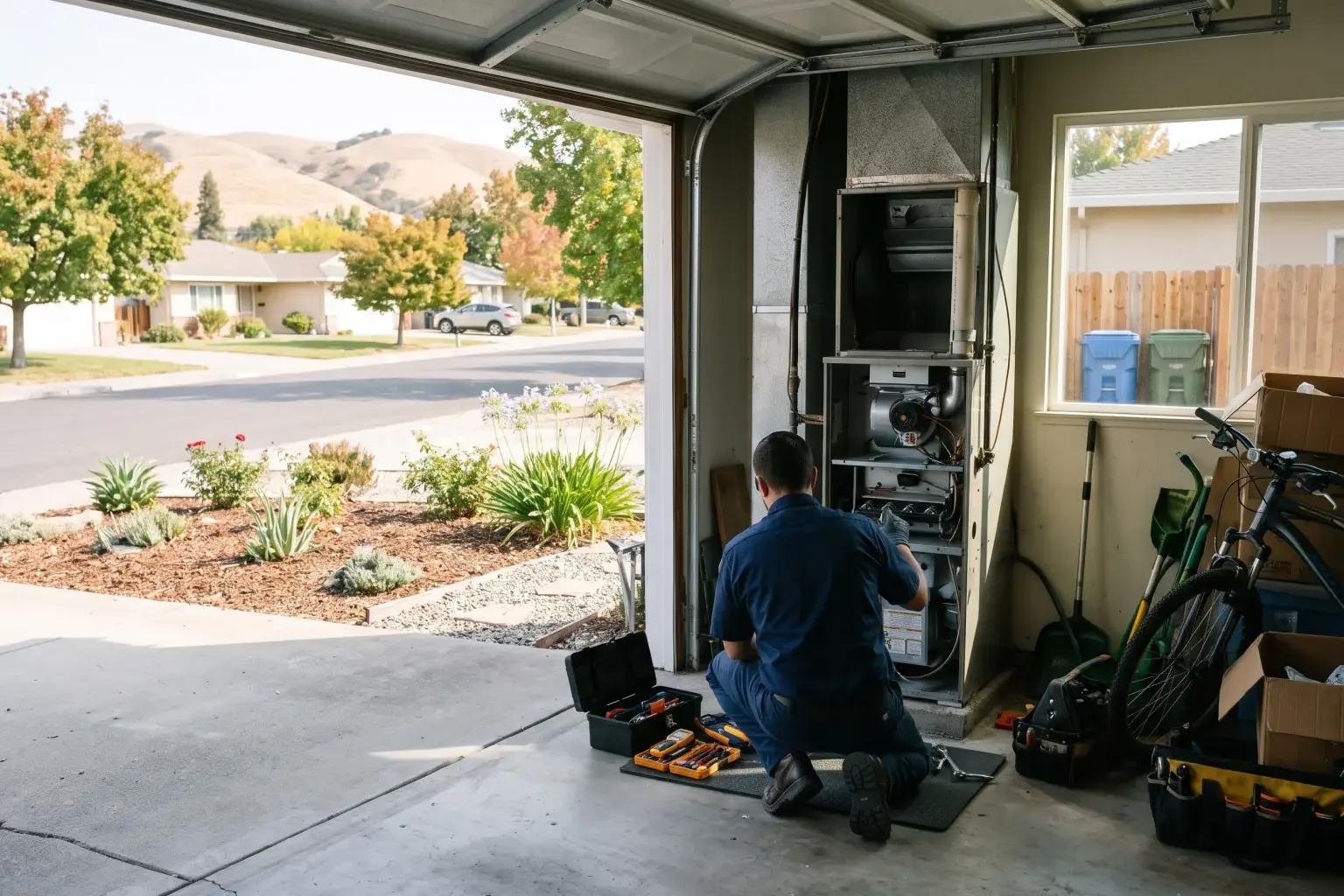
At your home, the technician will talk with you about the problem, then inspect and test the furnace, thermostat, and venting. Once they find the cause, they'll explain it in plain language, show you the worn or failed part when possible, and lay out your options. If more than one fix is reasonable, we'll explain the trade-offs.
Nothing gets repaired until you approve it. Many common parts can be replaced during the first visit. If a part has to be ordered, we'll tell you what to expect and how to keep the house safe and comfortable in the meantime. After the repair, we run the furnace through a full heating cycle to confirm it lights, heats, and shuts off correctly.
Before we leave, we'll also point out simple ways to help your furnace last, like changing the filter on schedule and keeping the area around the unit clear.
Furnace Repair by city
- Furnace Repair in Dublin
- Furnace Repair in Livermore
- Furnace Repair in San Ramon
- Furnace Repair in Union City
- Furnace Repair in Danville
- Furnace Repair in Fremont
- Furnace Repair in Hayward
- Furnace Repair in Newark
- Furnace Repair in San Leandro
- Furnace Repair in Milpitas
- Furnace Repair in Moraga
- Furnace Repair in Walnut Creek